
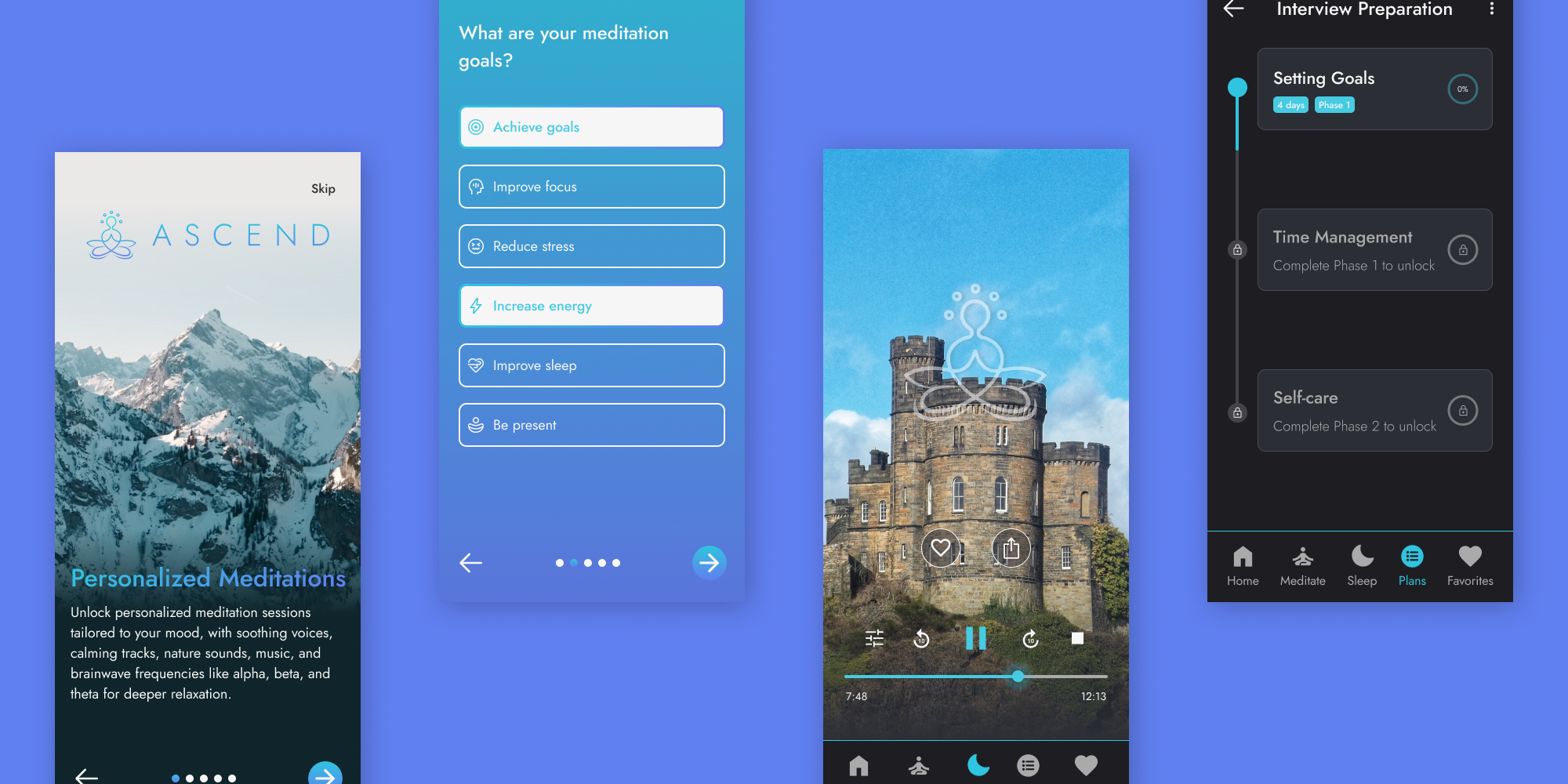
I lead the end-to-end design for Ascend Meditations, a mindfulness app, where I help transform a developer-built MVP into a well-designed wellness product.
During my time at Ascend Meditations, I worked in two phases.
PHASE 1: Pre v1 Launch
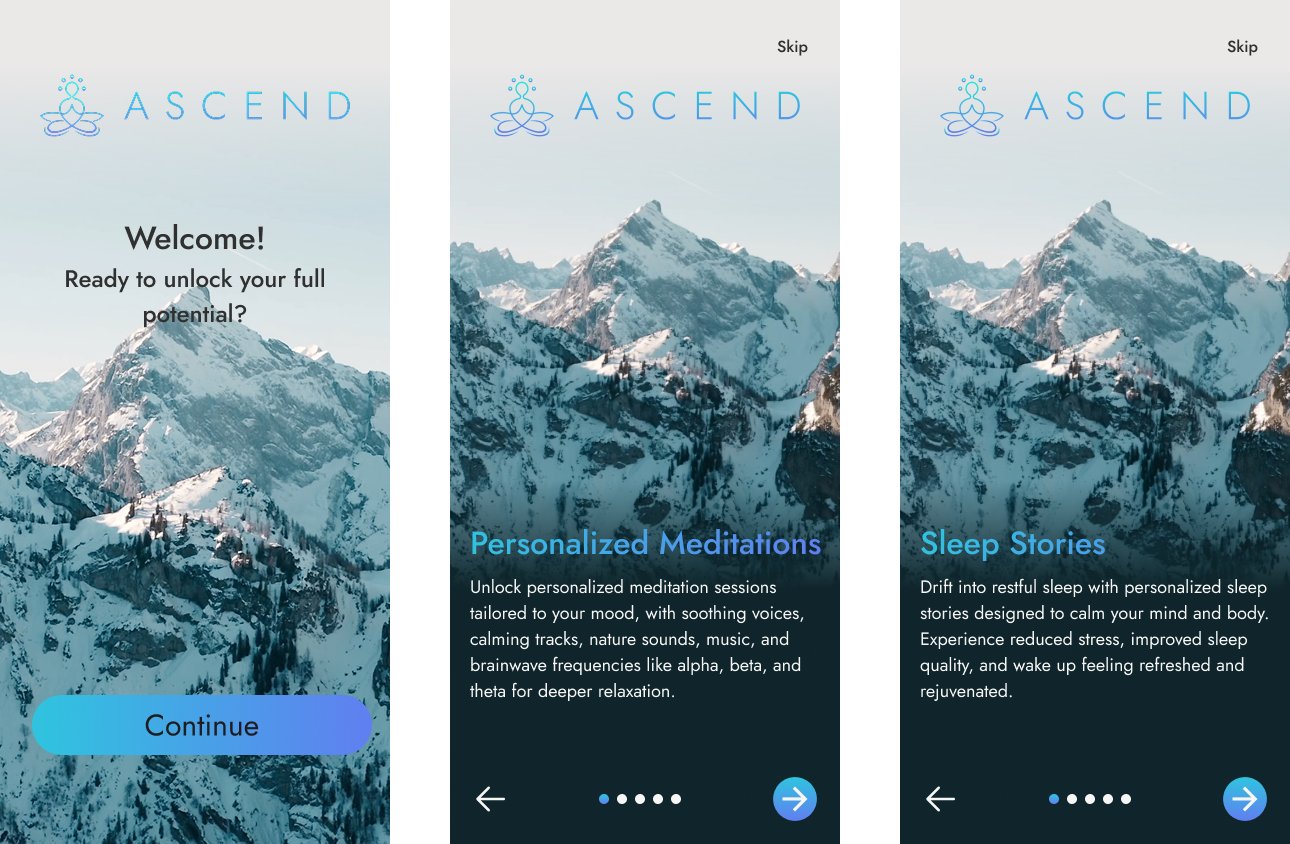
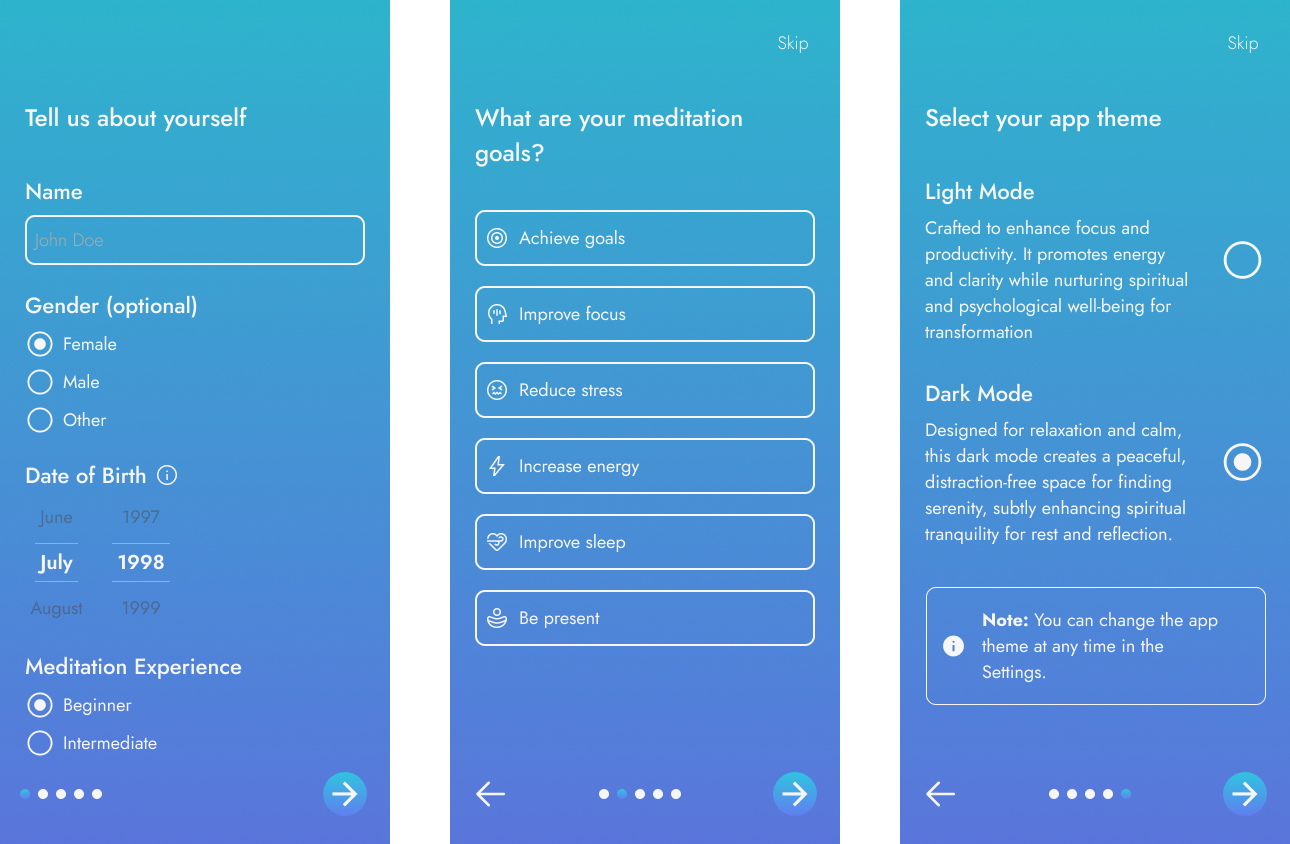
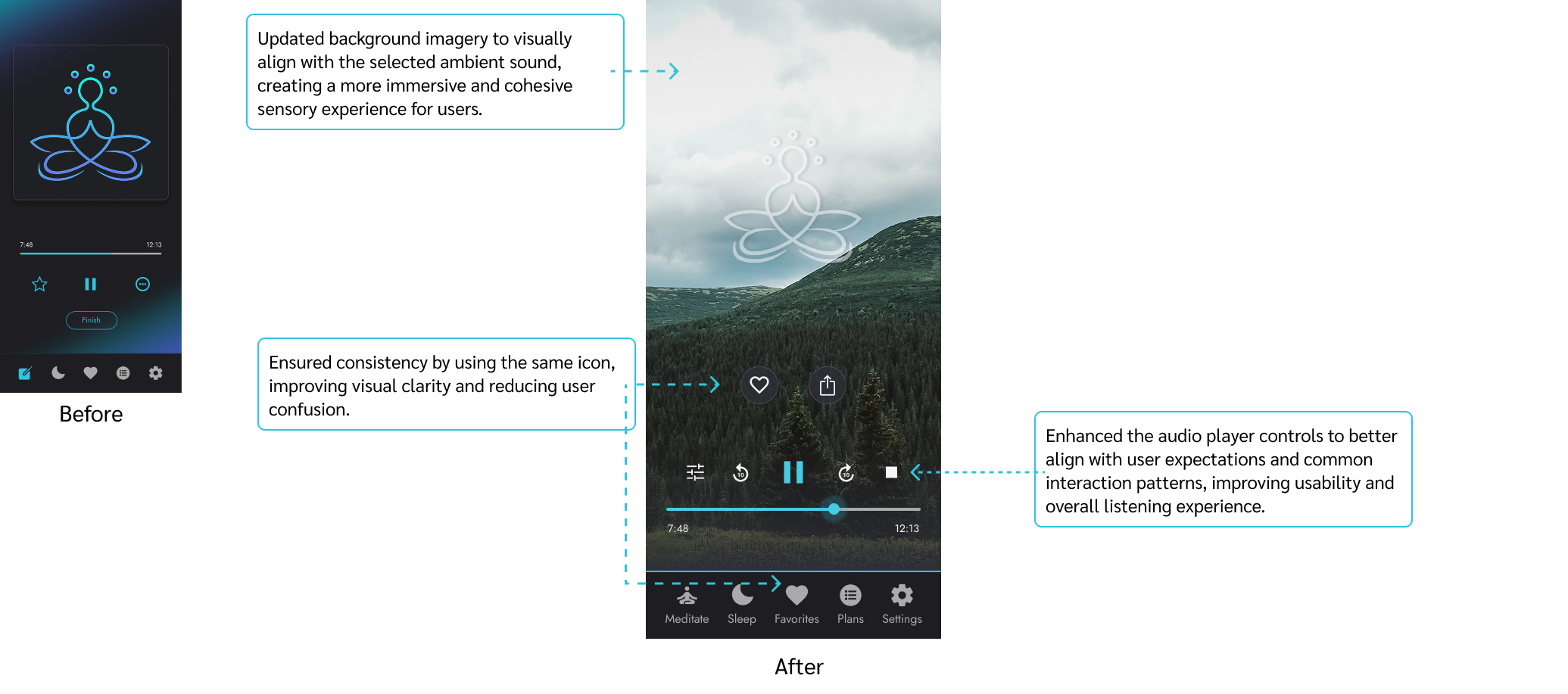
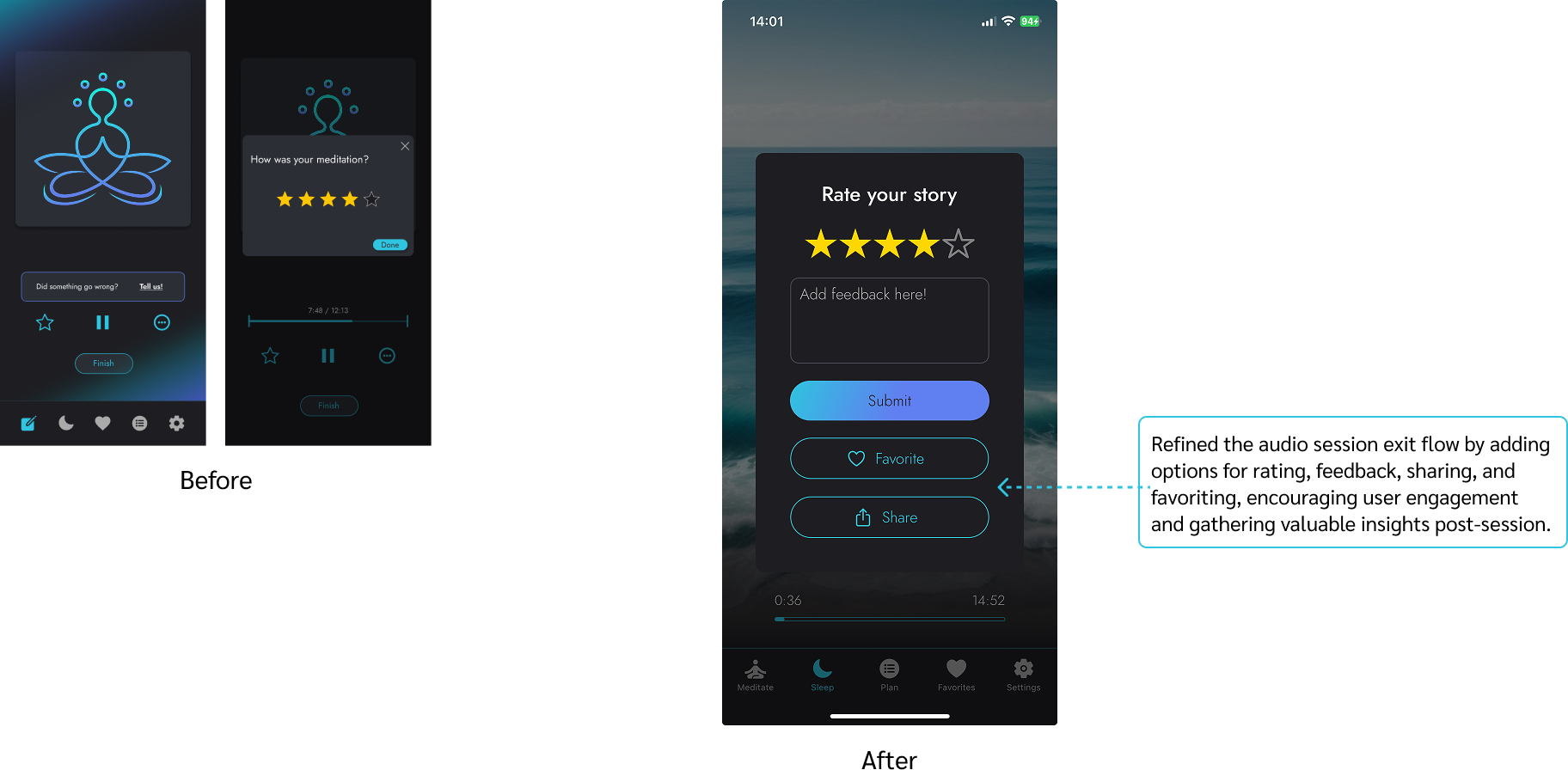
In the weeks leading up to launch, I led a fast UX overhaul to elevate Ascend from a functional MVP to a more polished, user-ready product. I began with a heuristic analysis to identify key usability issues, then focused on improving core flows under tight timelines. This included adding an onboarding experience, designing a lightweight personalization quiz, refining the audio player UX, and overhauling the “Plans” feature to feel more structured and intuitive. I also introduced visual updates to improve clarity, consistency, and brand tone—setting the app up for a stronger App Store debut and early investor conversations.
PHASE 2: Post v1 Launch (Coming soon)
ROLE
Research, UX/UI Design, Wireframing, Prototyping, Usability Testing
TEAM
Product Owner, 3 Developers, 4 Reseachers
DURATION
Ongoing
KEY RESULTS (PHASE 1)
University partnerships secured
Downloads on the App store
Decrease in development time
Ascend is an AI-powered mental wellness app designed to support people who perform under pressure—starting with student athletes. It helps users stay focused, recover faster, and build lasting resilience through personalized meditations, structured mental training plans, and adaptive sleep content. Whether it's mindfulness, breathwork, or better rest, Ascend intelligently tailors every session to fit where you are and where you're headed—making mental wellness a consistent part of high-performance routines.
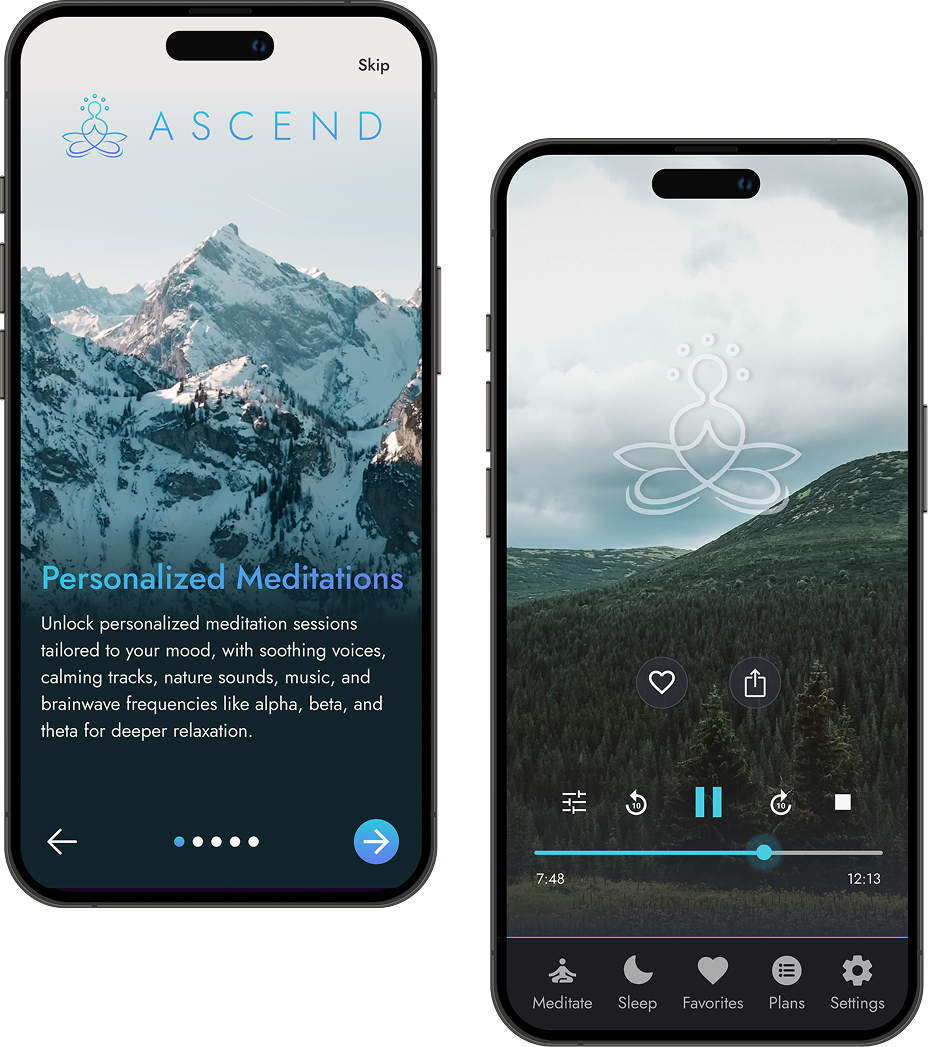
Ascend was preparing for its debut as a first-of-its-kind AI-powered meditation app. The initial design version lacked visual polish, usability, and consistency. Without a design system in place, the experience felt fragmented and unrefined, putting the app’s credibility at risk just as it was preparing for launch and investor meetings.
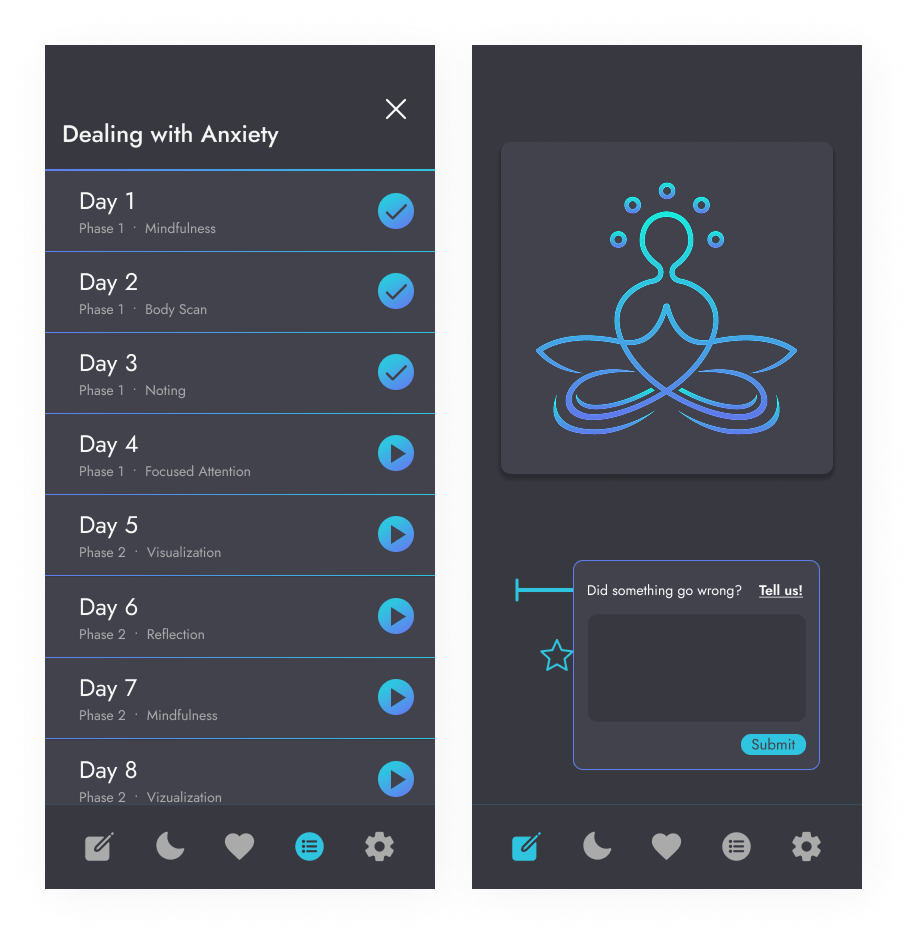
Version 1 designs (Plans page & Audio screen)
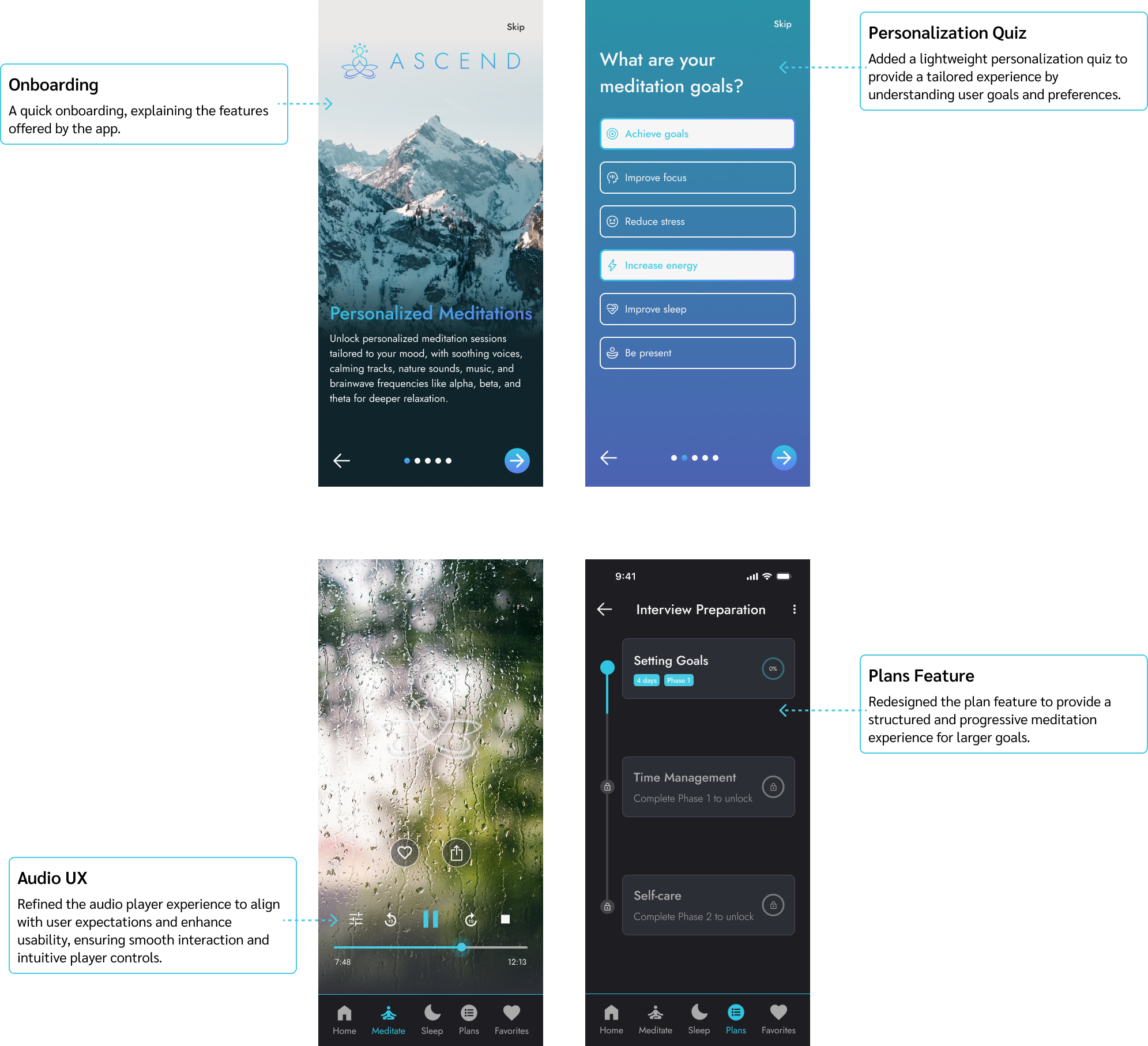
Phase 1 designs - Preview
Launch a polished, credible product that reflects the innovation and value of AI-powered meditation.
Build early trust with partners and users through a user experience that feels intentional, professional, and emotionally resonant.
Lay the foundation for long-term scalability by introducing design standards and improving the overall user experience without delaying release.
Strengthen positioning for investor conversations by showcasing a product that looks and feels market-ready.
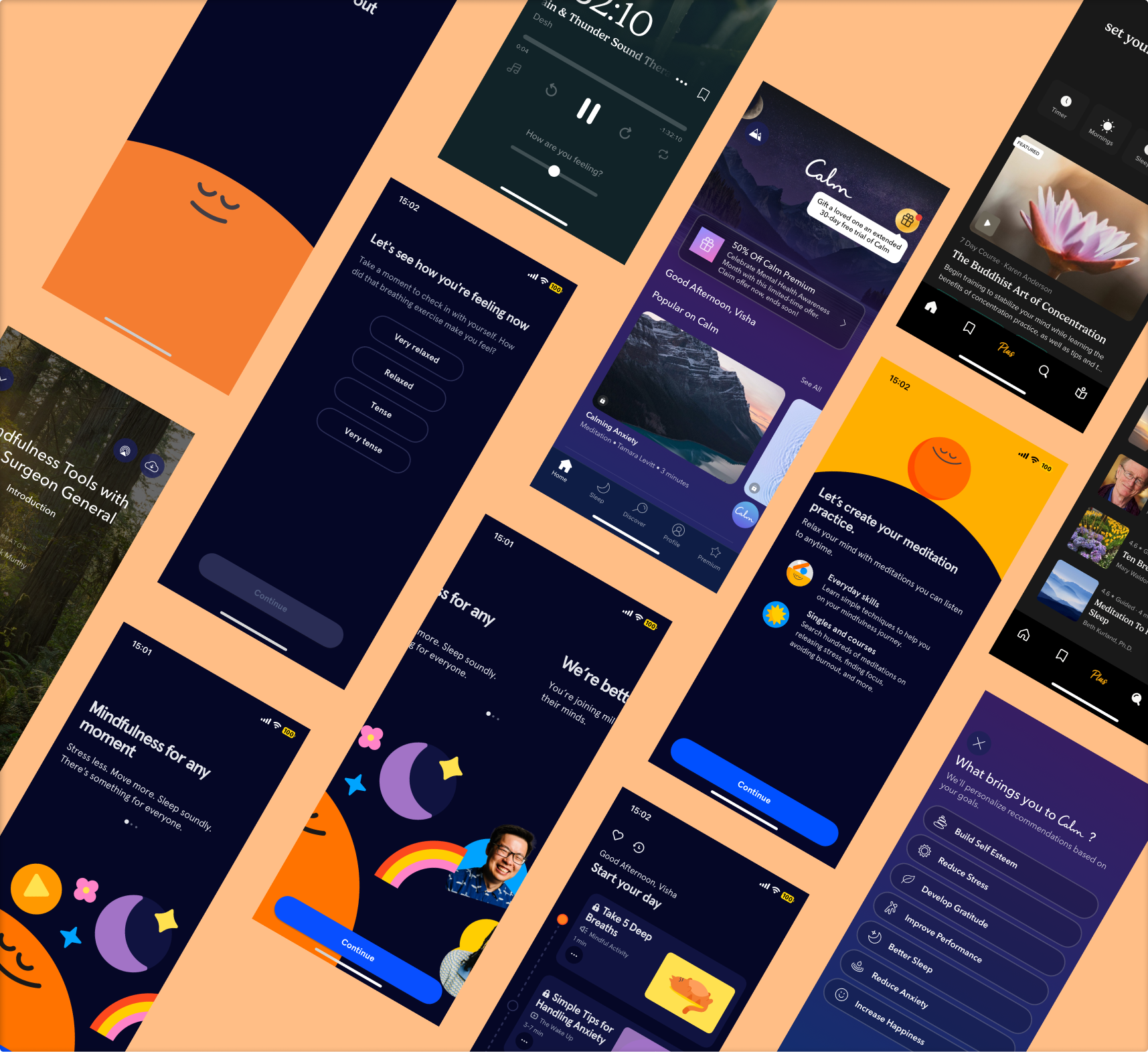
1. Competitor audit
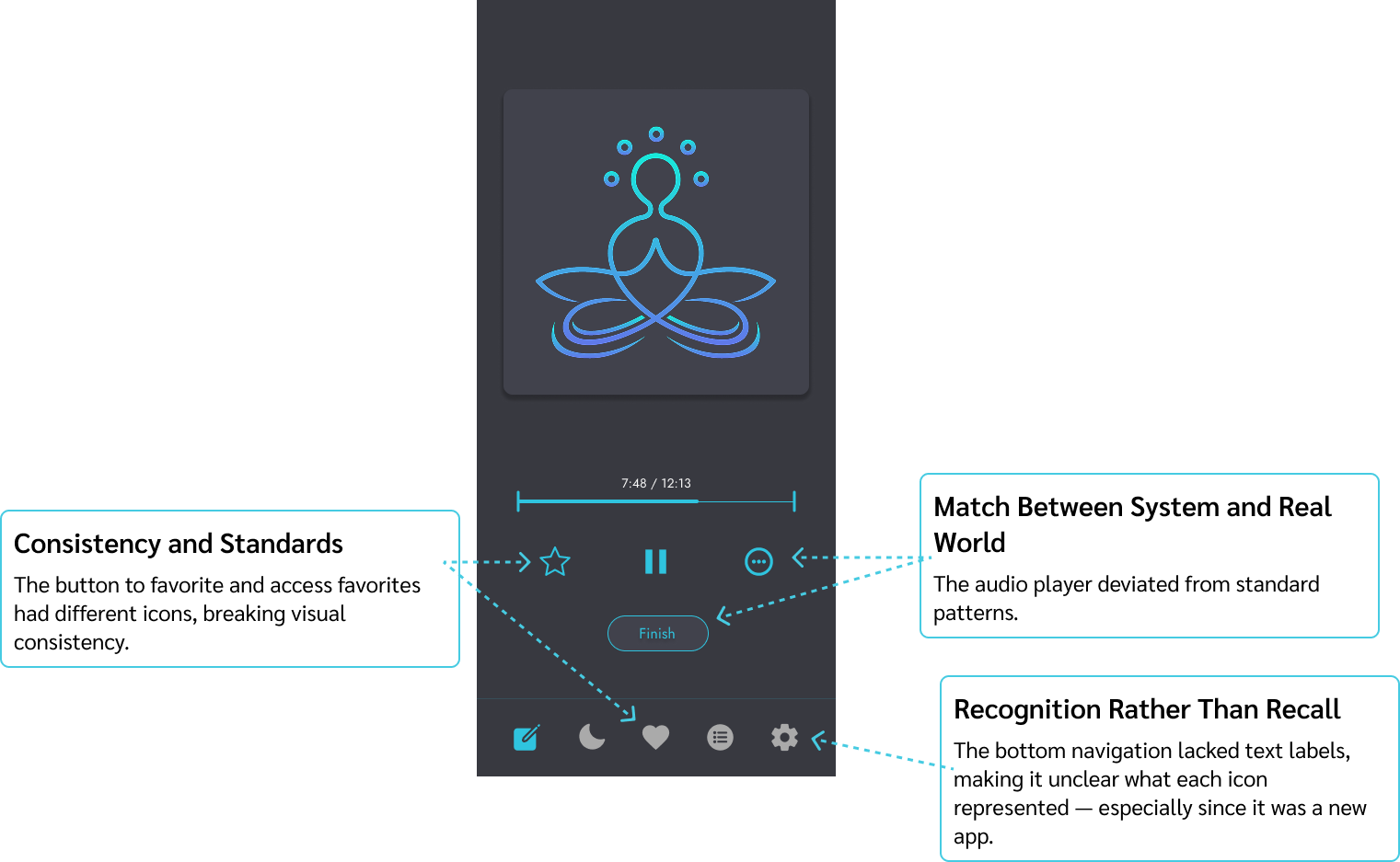
2. Heuristic analysis
1. Product Requirements
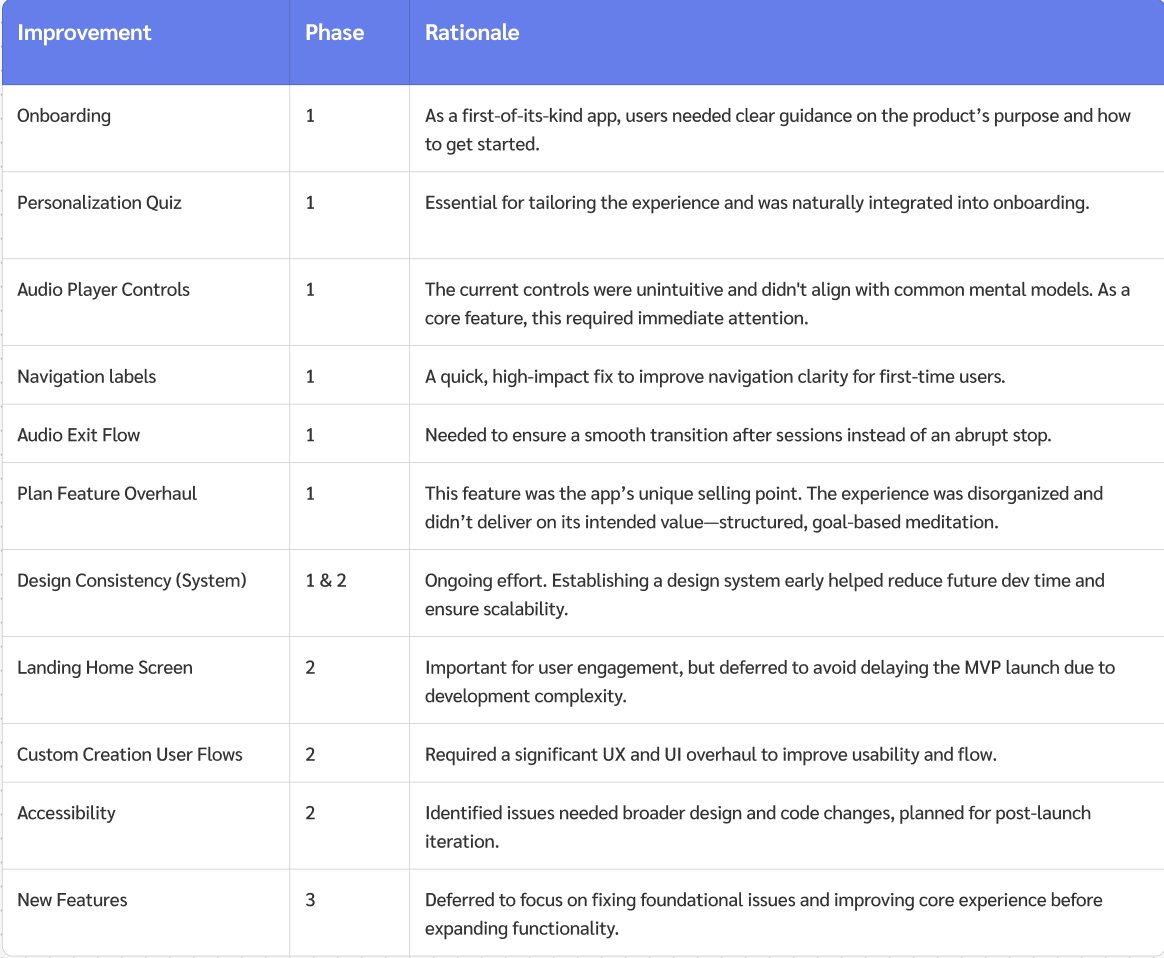
2. Prioritized and Categorized Improvements
1. Design Iteration 1
2. Handoff
1. Design Iteration 2
2. Usability study
3. Design Iteration 3
4. Handoff
Due to tight timelines before launch, I conducted a heuristic analysis to quickly identify the most critical usability issues to address in the first iteration of the MVP.
I examined the most commonly used meditation apps like Calm, Headspace, and InsightTimer to understand design patterns, strengths, and gaps in the wellness and meditation space.
PATTERNS OBSERVED -
1. Onboarding & Personalization:
Clear app introductions paired with short quizzes create a more tailored, welcoming experience.
2. Personalized Home Screens:
Dynamic landing pages highlight progress, active sessions, and recommendations to drive engagement.
3. Consistent Visual Identity:
Calm, cohesive design systems build trust and emotional connection.
4. High-Quality Sensory Design:
Polished visuals, sounds, and guide voices enhance the perceived quality.
5. Routine Check-Ins:
Regular mental state check-ins personalize content and encourage habit formation.
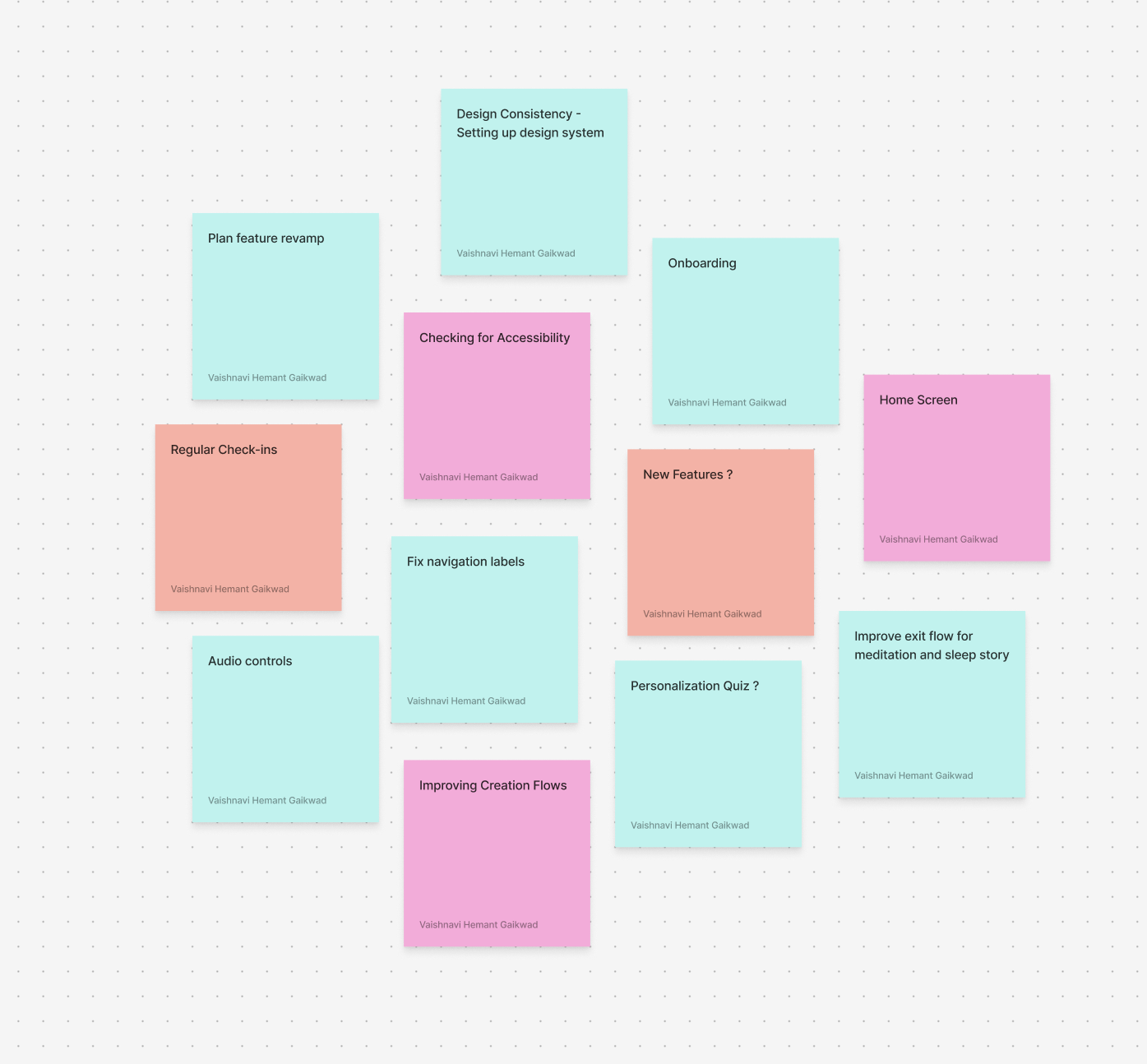
After completing the heuristic evaluation and competitive benchmarking, I analyzed the insights and outlined key improvements needed to enhance usability, visual design, and content personalization.
By collaborating closely with developers and the product owner, I prioritized design improvements based on severity, user friction, and business goals for the initial release. We aligned on what could realistically be implemented within the tight pre-launch window—focusing on high-impact fixes while minimizing development complexity. Where needed, I adapted design solutions to work within the existing React Native component library to ensure a timely release without compromising core usability.
Decision #1
Iteration 1
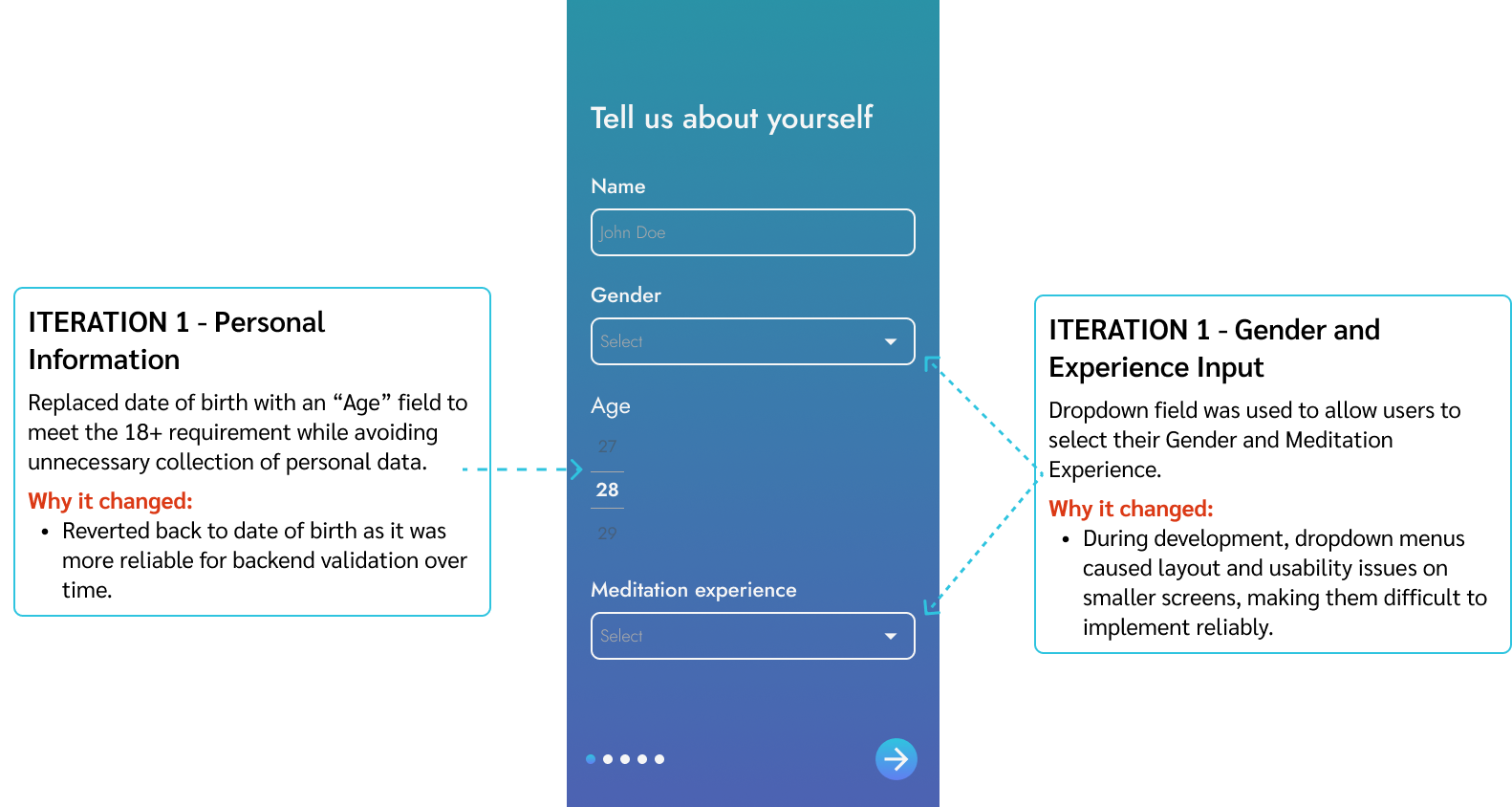
Iteration 2
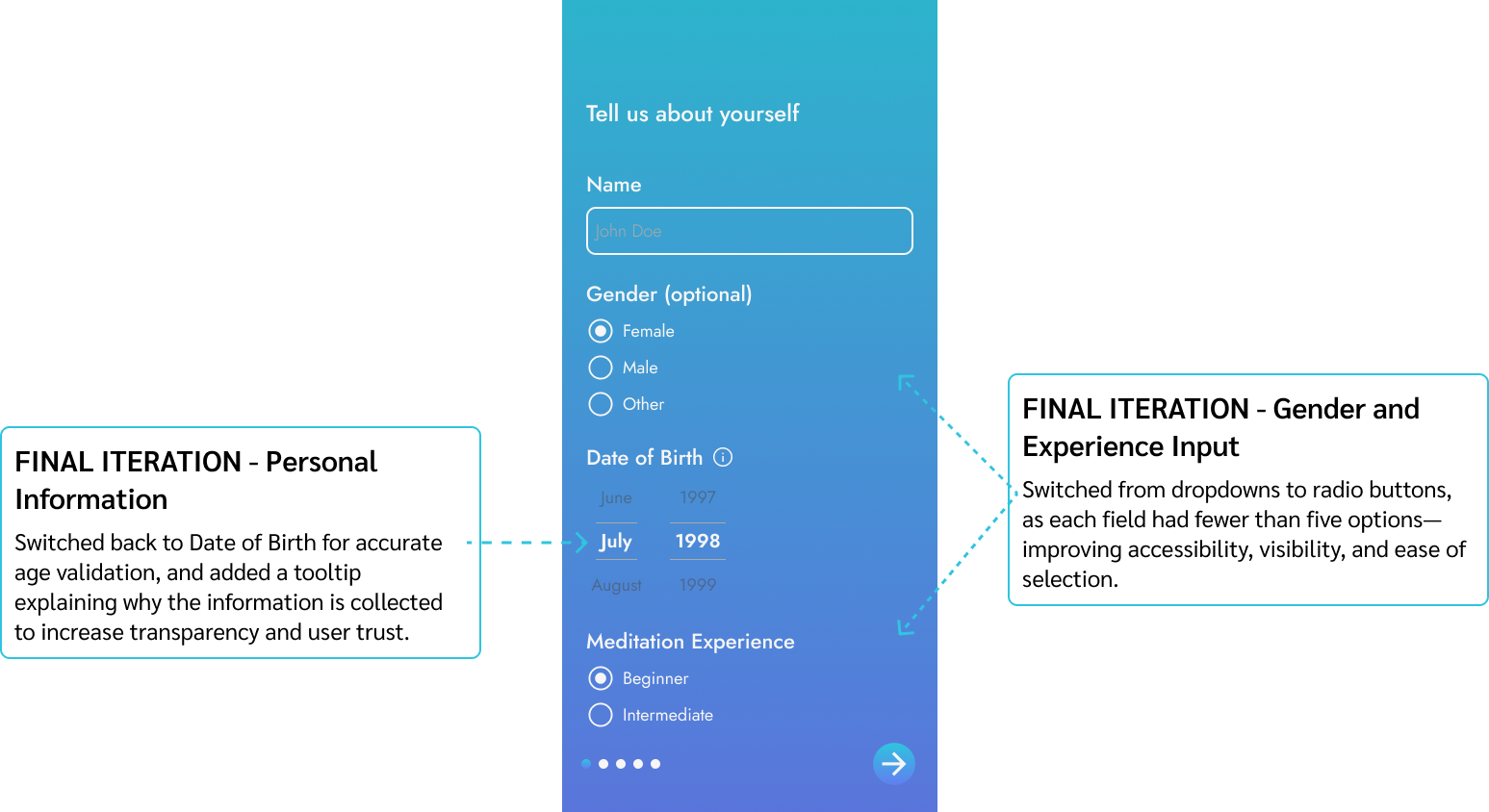
Decision #2
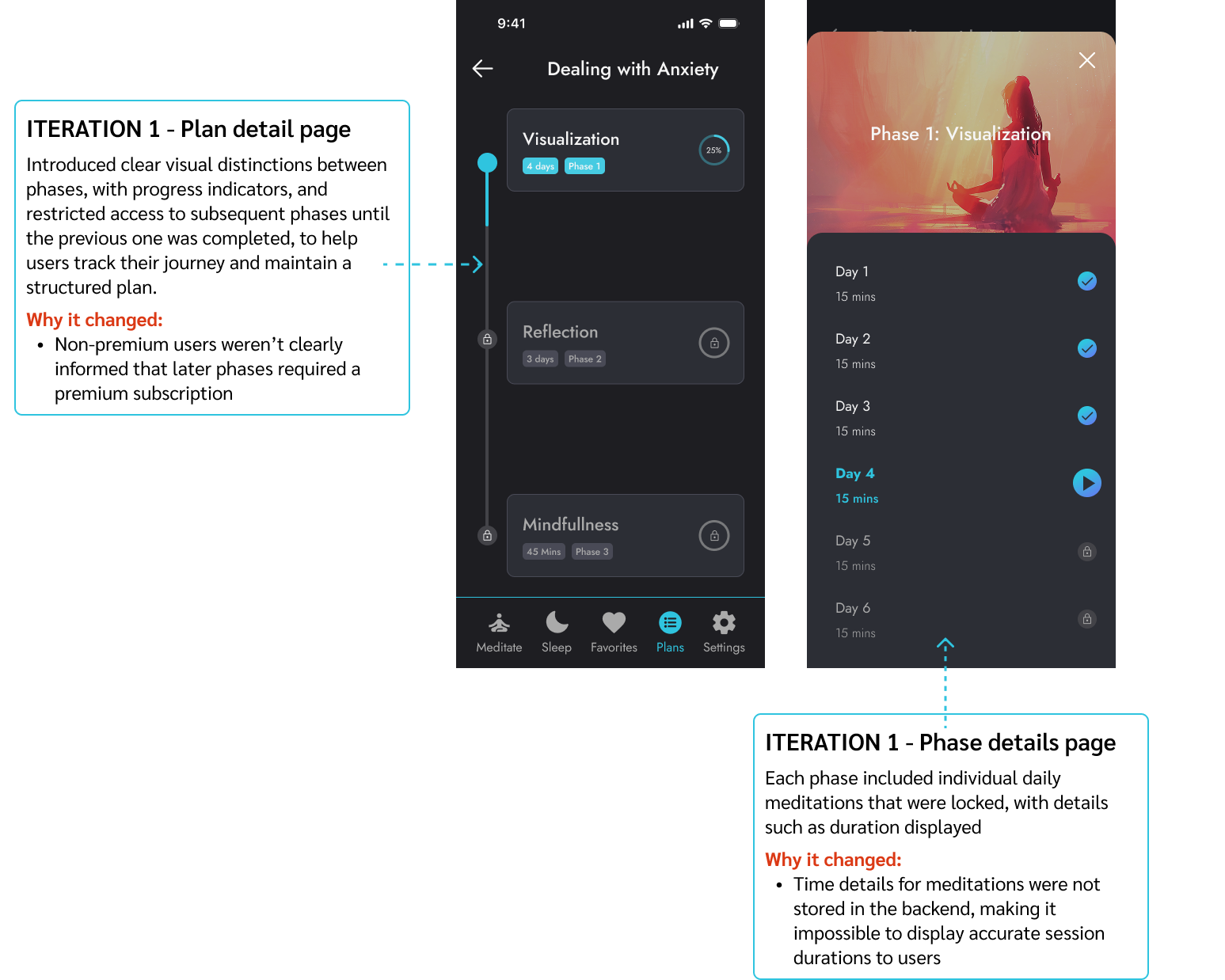
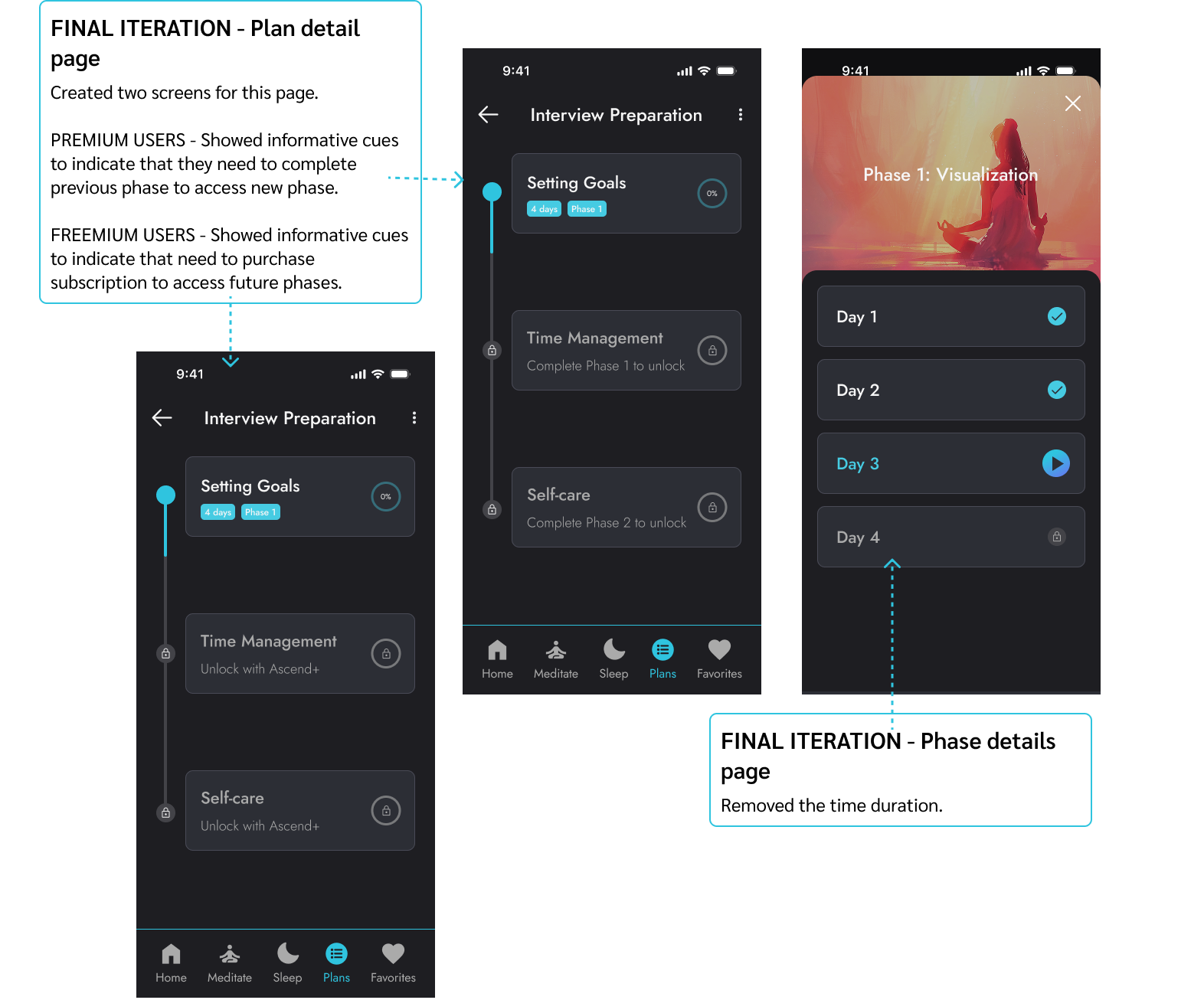
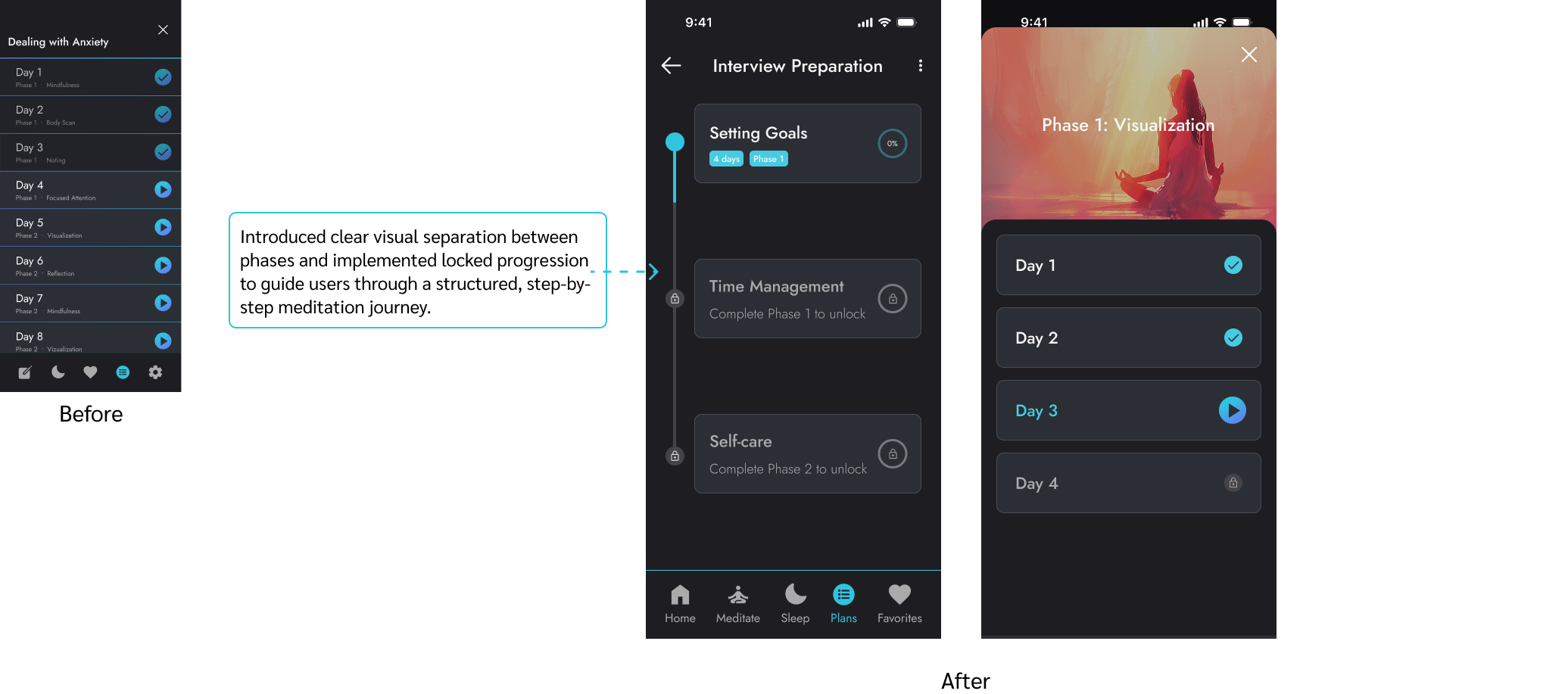
Plans is a feature that designs a personalized meditation journey, spanning several days and divided into phases, with each phase building upon the previous one. This approach breaks down larger meditation goals into a series of progressive sessions, rather than offering a single custom meditation.
Initial Design

Iteration 1
Iteration 2
Improvement #1 & #2
Improvement #3
Improvement #4

Improvement #5
Improvement #5
Redesigned key experiences to improve usability, personalization, and visual consistency—leading to stronger engagement and premium user conversions. Laid the foundation for a scalable design system to support future growth.
Addressed key usability issues like navigation labels, inconsistent icons, and unclear feedback through focused heuristic analysis and iterative design.
Began building a scalable design system to reduce inconsistencies and development time in future iterations.
Delivered a polished, professional UI that helped position Ascend as a credible, premium wellness product ahead of its App Store launch and investor meetings.
University partnerships secured
Downloads on the App store
Decrease in development time
Learned to balance design quality with development constraints by focusing on high-impact improvements under tight timelines.
Close collaboration with developers helped streamline implementation and make strategic design decisions faster.
Clear content hierarchy and visual cues can influence user behavior and increase premium upgrades.
Setting up consistent visuals and design systems early on sets the stage for scalable, maintainable product growth.

Brewed with ☕ and 🦉 nights

